Searching for Light (what draws me to a scene)
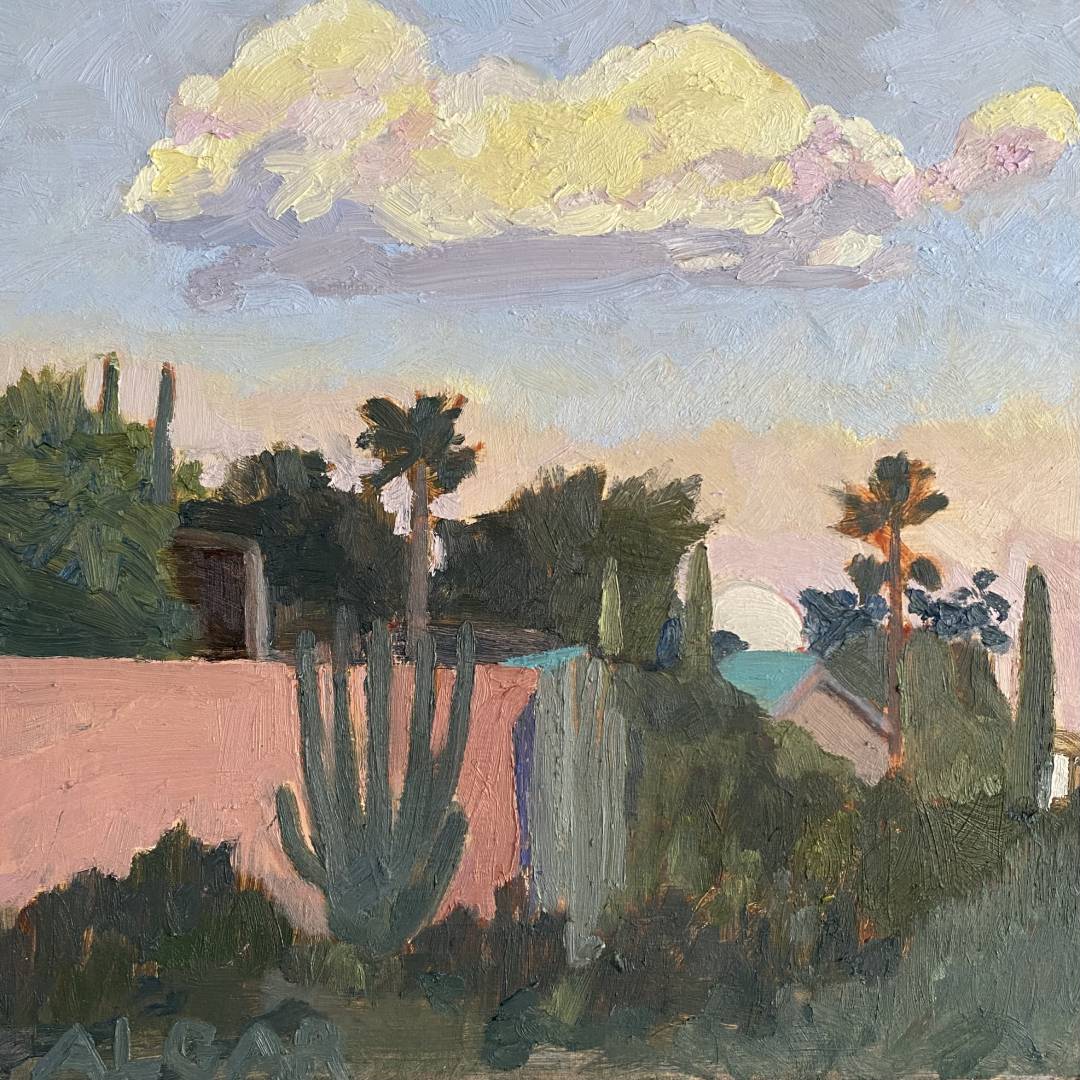
Light is always the first thing I notice. Before colour, before shape, before the details of a place reveal themselves, there’s a particular way the light falls that makes me stop. Sometimes it’s subtle, a pale shimmer across distant grasses, or the glow on the edge of a cloud. Other times it’s bold and fleeting, the kind of light that disappears as soon as you think, I should paint this.
I’ve realised over time that this instinctive pull toward light is what begins most of my paintings. It’s rarely about a specific view or location; it’s the atmosphere, the mood, the way light transforms something ordinary into something worth pausing for. When I first noticed that there was a feeling that accompanied that moment of recognition, I put it down to awe. These days, I've discovered, you could also call it a "glimmer". That moment of recognition becomes the seed of a painting.
When I’m outside, I try to pay attention to these light shifts. How morning light softens the edges of everything, or how late afternoon sun sharpens a silhouette. Even on dull days, there’s a quiet beauty in the muted tones and the way shadows become gentle rather than dramatic. Each type of light has its own vocabulary, and learning to read it is my practice.
Whether I’m working outdoors or in the studio, I’m not trying to reproduce the scene exactly as it appeared. Painting en plein air lets me respond directly to the shifting light (quickly and instinctively), while studio work gives me space to interpret things more slowly. In both settings, I stay focused on the quality of the light that first stopped me. Sometimes that means simplifying the landscape to let the atmosphere speak; other times it means pushing colour or adjusting forms to hold onto the feeling of that moment.
Light is never still. It shifts and slips and surprises. It asks us to look again — and that’s what keeps me painting.
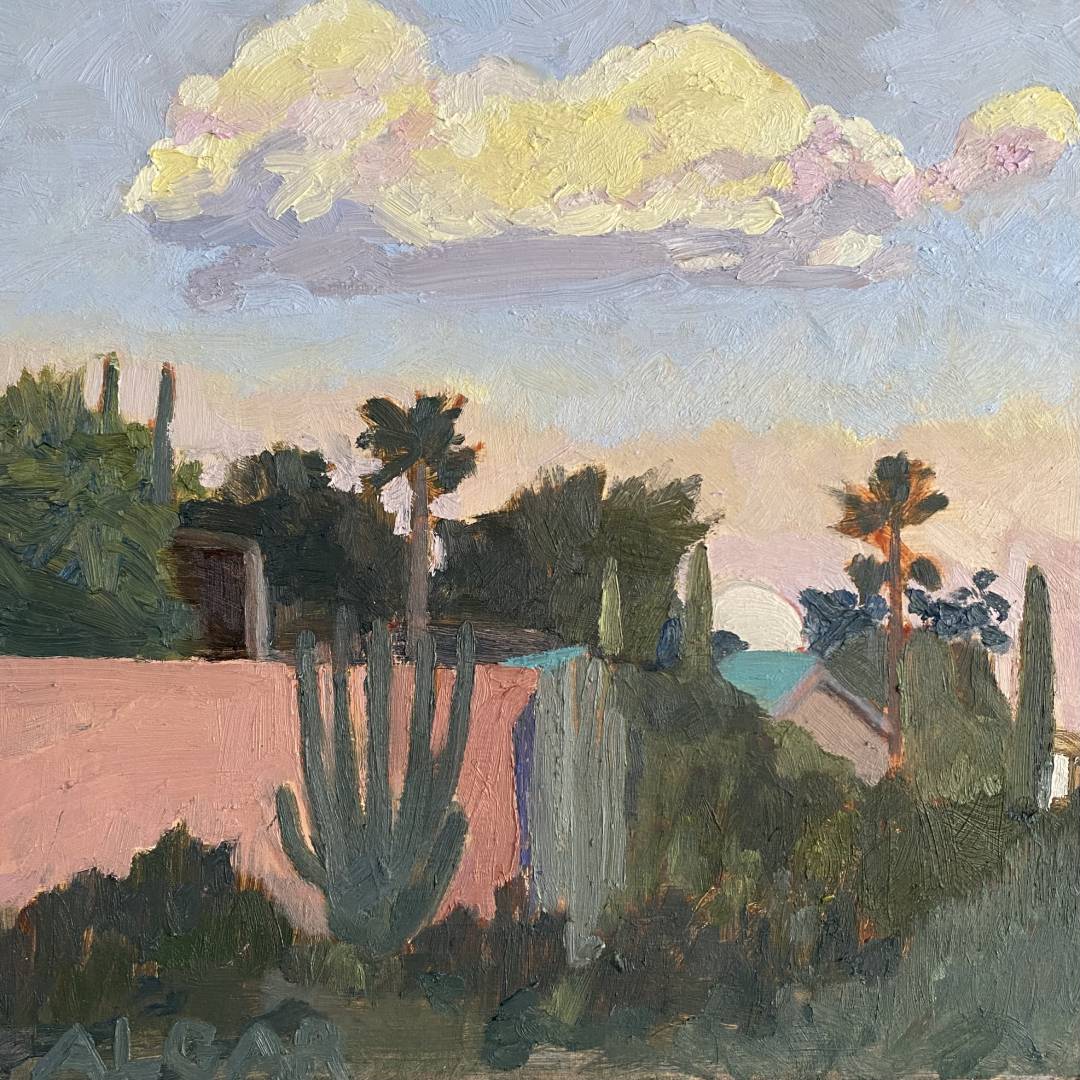
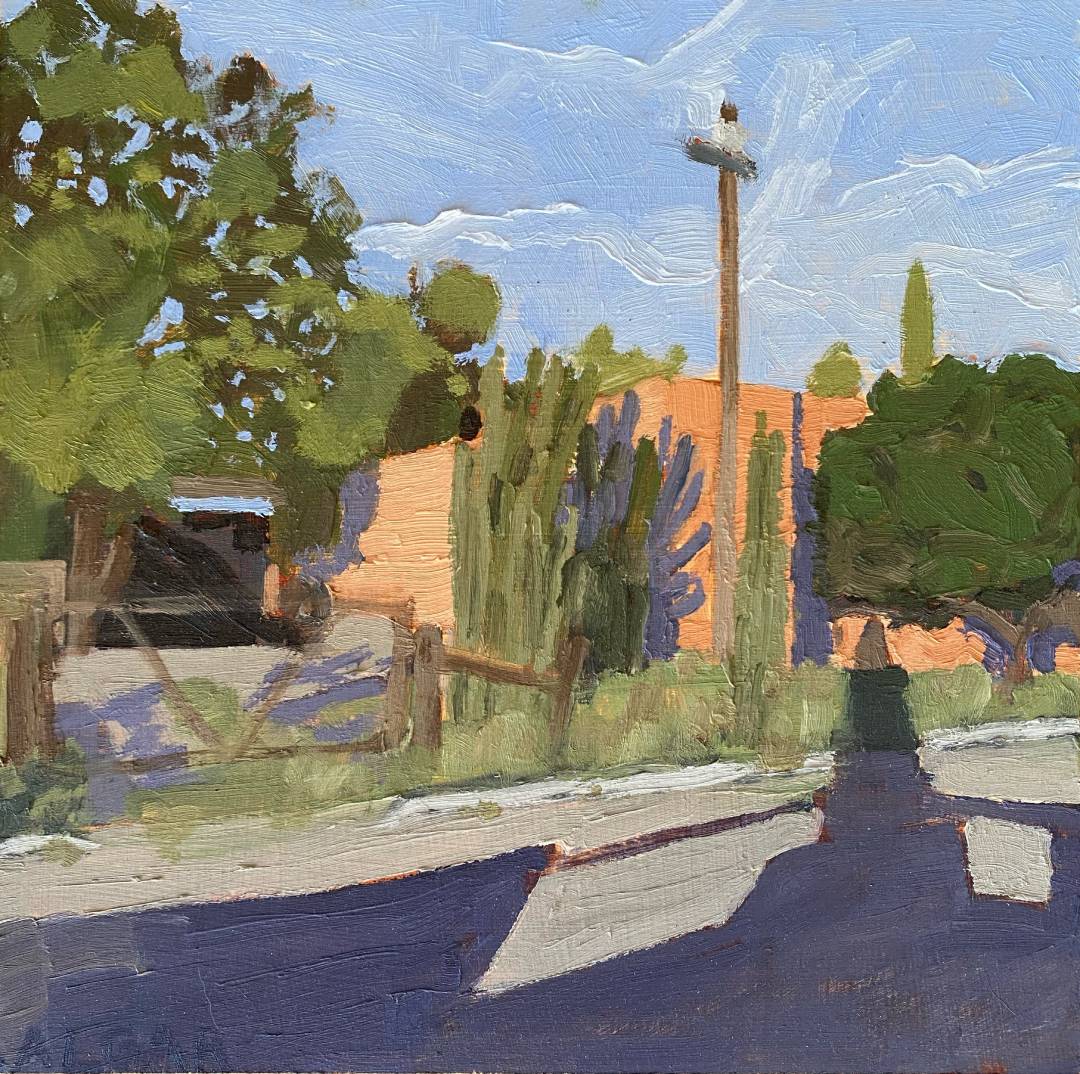
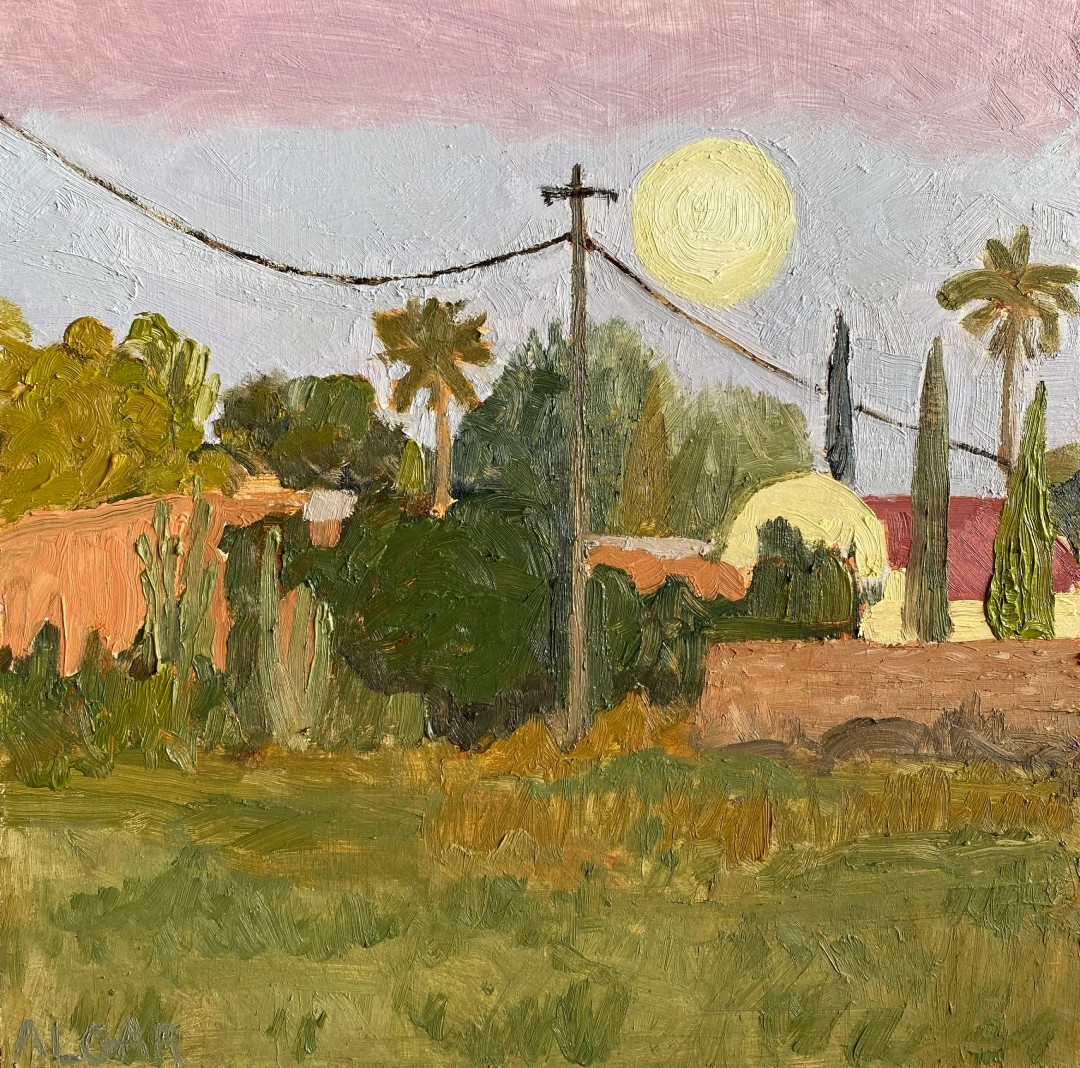
The three paintings above are all of the same house in Adendorp. This is the view from the back of my house, in the opposite direction of the dramatic sunset skies and Spandau Kop. I see this when I take in the washing in the evenings. A touch of the sunset on a cloud, or a long shadow creeping across the dust road, or the moon looking spectacular as the sunset touches the scene with a warm pink glow.
There is more to it than just seeing a scene and painting it. With each of these paintings, I worked from a reference photograph initially to make a pencil sketch of the values.
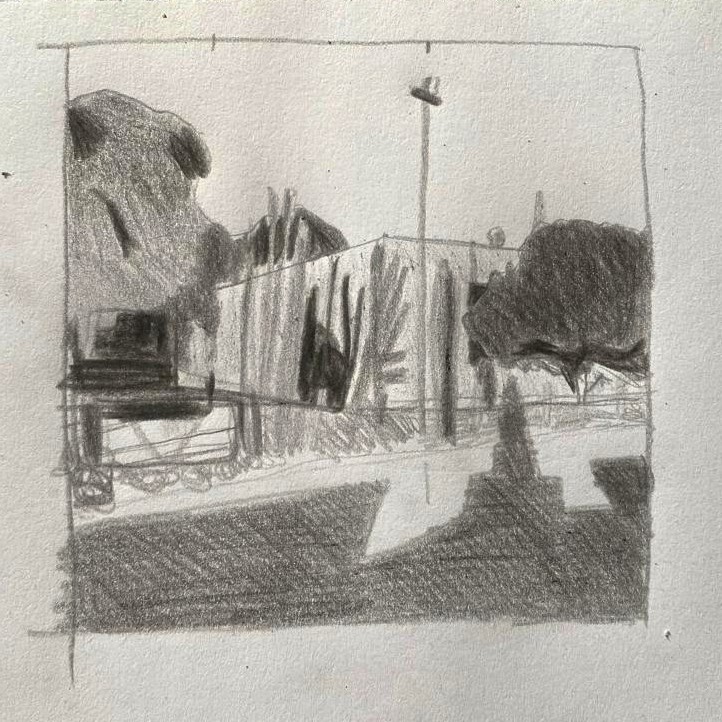
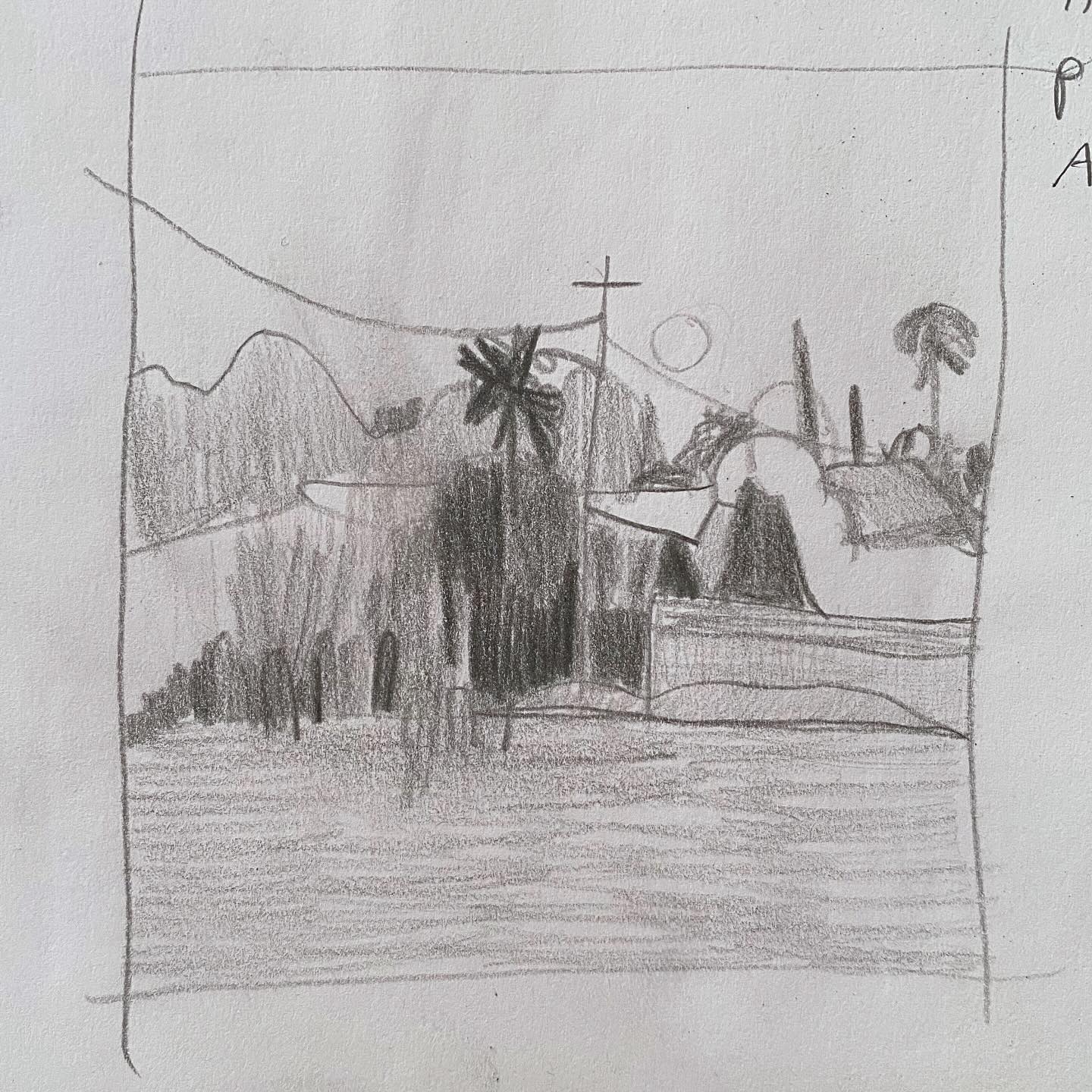
This is the point at which I usually know if I have something worth painting, or not.
To see currently available paintings, click here.
To learn to see the light yourself, explore upcoming workshops here.